 Mango Labs
Introducing Menoodo, our digital menu platform
Our new product turns a restaurant menu into a page guests open by scanning a QR code — in their language, in your colors, changed in seconds.
Almost every restaurant we talked to this year had the same menu problem, and it was never about the food. The menu lived in a PDF someone's nephew made in 2019, or on a laminated card that goes stale the week the fish supplier changes. Moving one price means paying a designer, or reprinting forty sheets.
So we built Menoodo, and it's live now. You build the menu once in a dashboard, and guests open it by scanning a QR code on the table. Nothing to install, nothing to update by hand.
From paper to phone in an afternoon

The part that usually kills these projects is the typing. So you don't type: hand over a PDF, a spreadsheet or the address of your current website, and the AI import hands back an editable menu with dishes, descriptions, prices and categories already in place. What's left is fixing the two dishes it misread, not entering sixty. After that it's drag-and-drop — categories in the order you actually serve them.
It should look like your restaurant, not like us
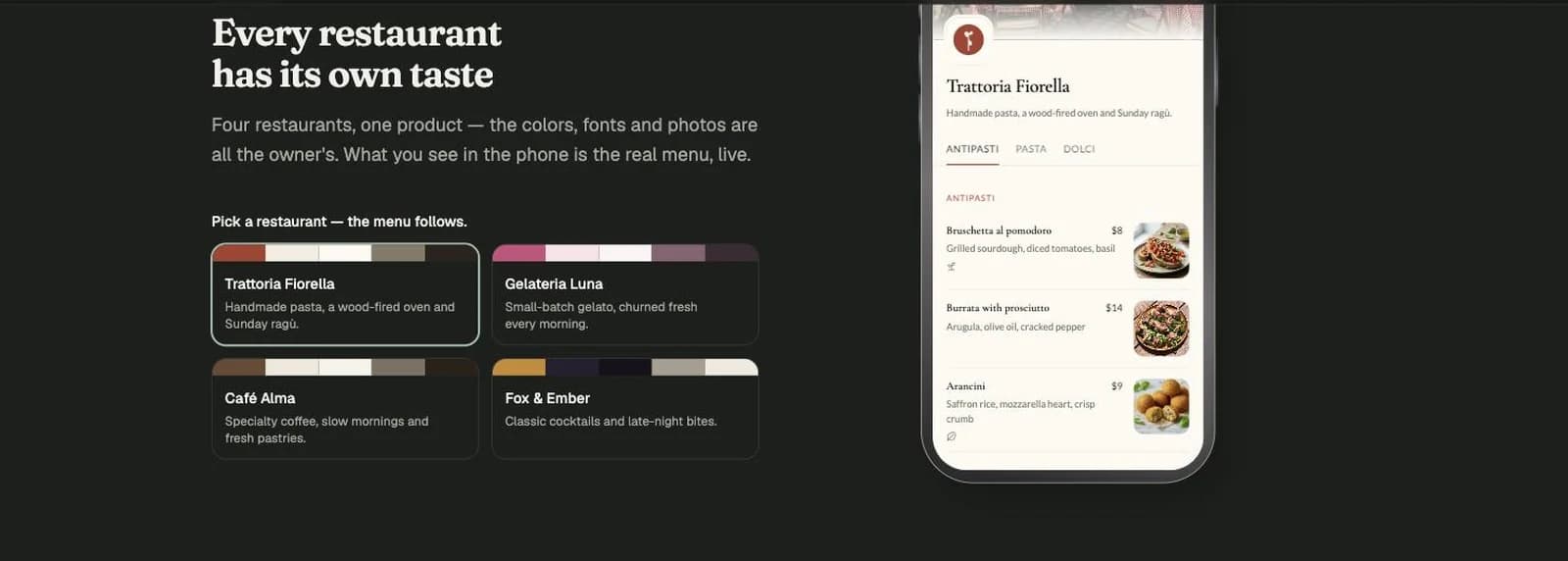
Start from a preset, then take it apart — your colors, your fonts, your logo, your cover photos. The four menus on our home page are the same product with four owners' choices, and the phone shows the real thing, live.
I think this is the part that decides whether a digital menu survives past the first month. If it looks like a generic template, the printed card genuinely feels warmer, and the QR code quietly stops getting used.
In the language your guest actually reads

Enable the languages your room hears. Auto-translate drafts the gaps and you approve every word before it ships — a machine guess about an allergen isn't something to publish unread. There are around 120 languages available for the menu itself, right-to-left included, and the dashboard is translated into eight.
A QR code you'd actually put on a table
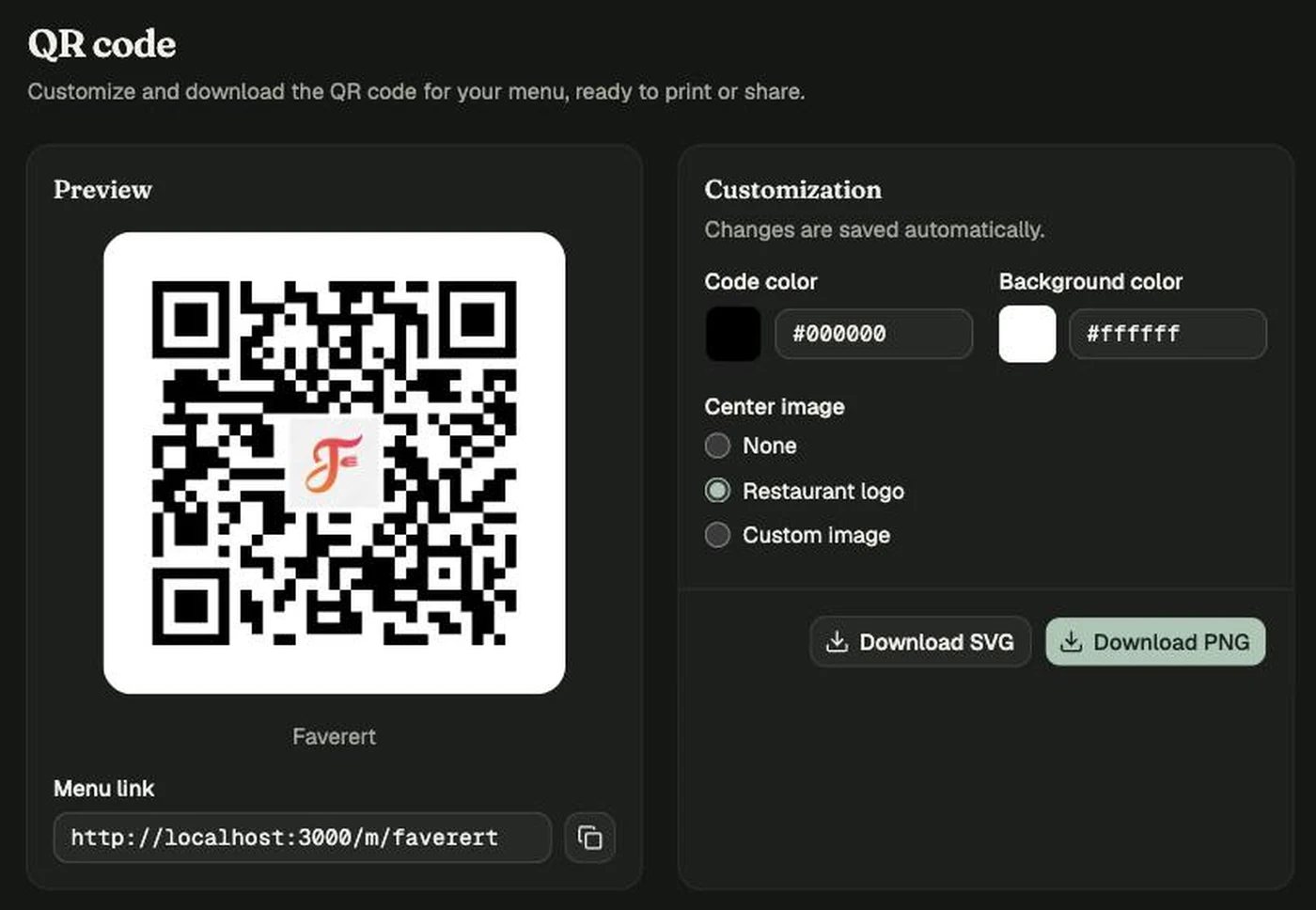
The QR designer takes your colors and drops your logo in the center, exports SVG or PNG for the print shop, and previews the code on an A6 table tent at real proportions so you can judge it before the printer does. It's also free to use without an account, over at the QR generator — your link is turned into a code in your own browser, and never reaches us.
A menu that changes during the day
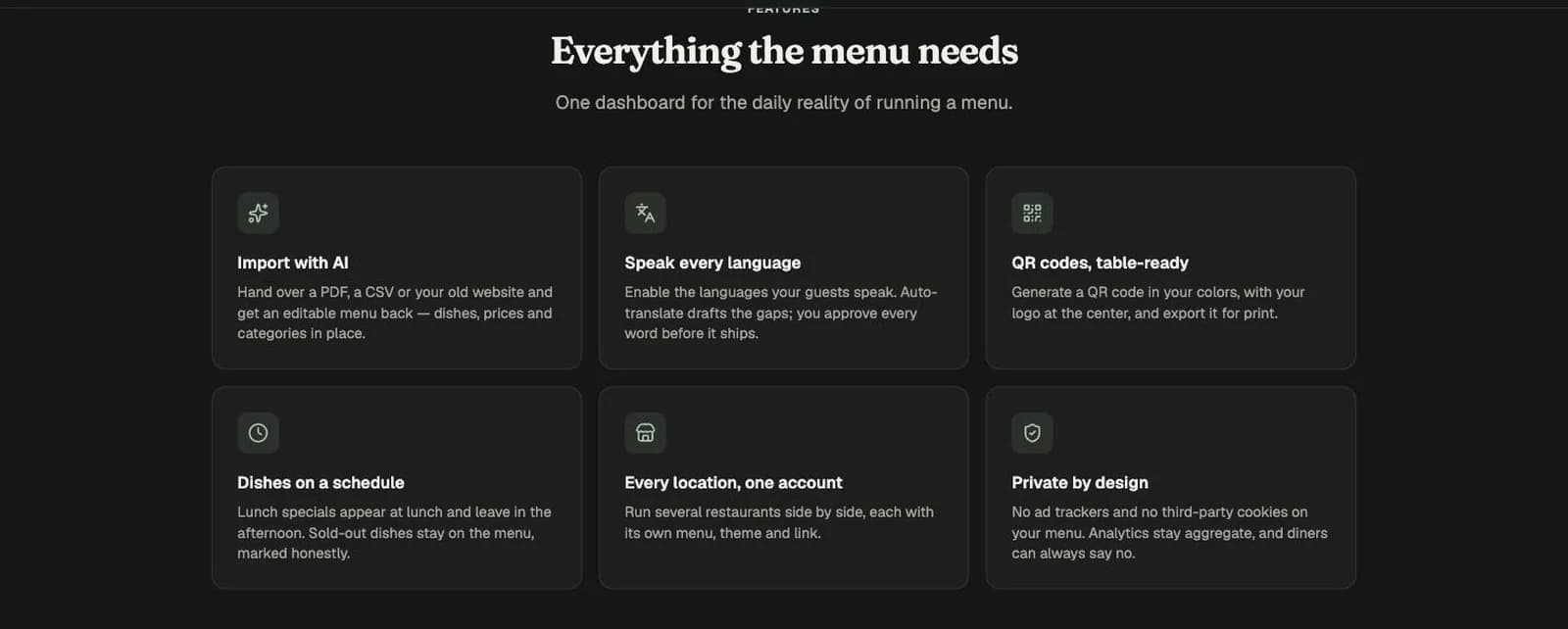
Menus are not static documents, which is exactly why paper loses. Lunch specials appear at lunch and leave in the afternoon on their own. A dish that ran out stays on the menu, marked honestly, instead of disappearing and reappearing. Dietary tags sit next to the dishes that need them. And if you run more than one place, they live in one account, each with its own menu, theme and link.
Your guests tell you first
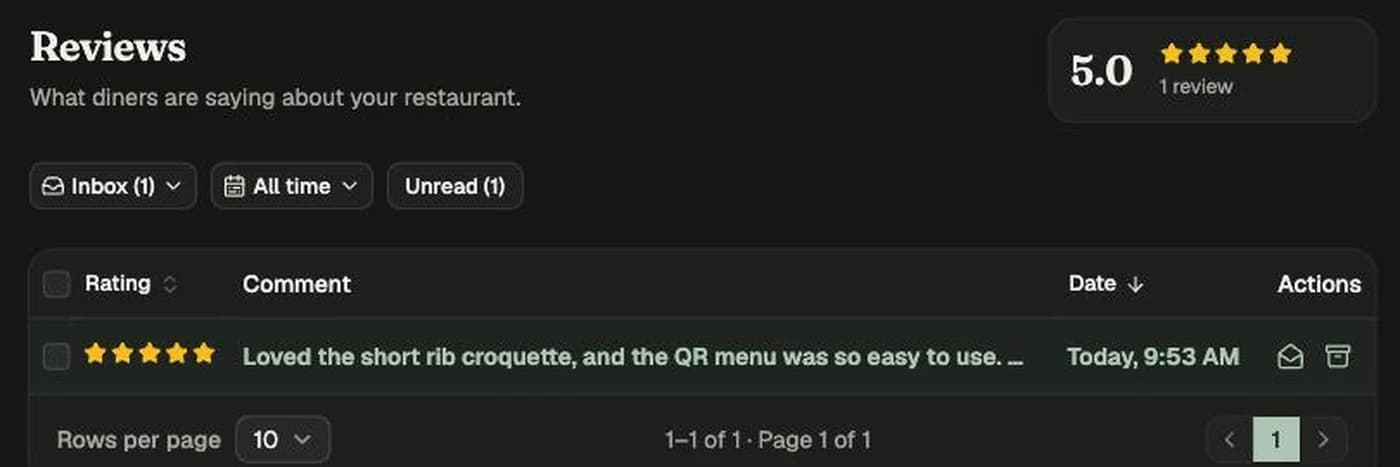
Diners can rate the visit from the menu they already have open — no account, no trip to an app store. Those reviews land in your dashboard inbox and nowhere else. It won't stop anyone writing a public review, but it does mean the wine-list complaint reaches you on the night, while you can still send something to the table.
And the menu tells you what happened
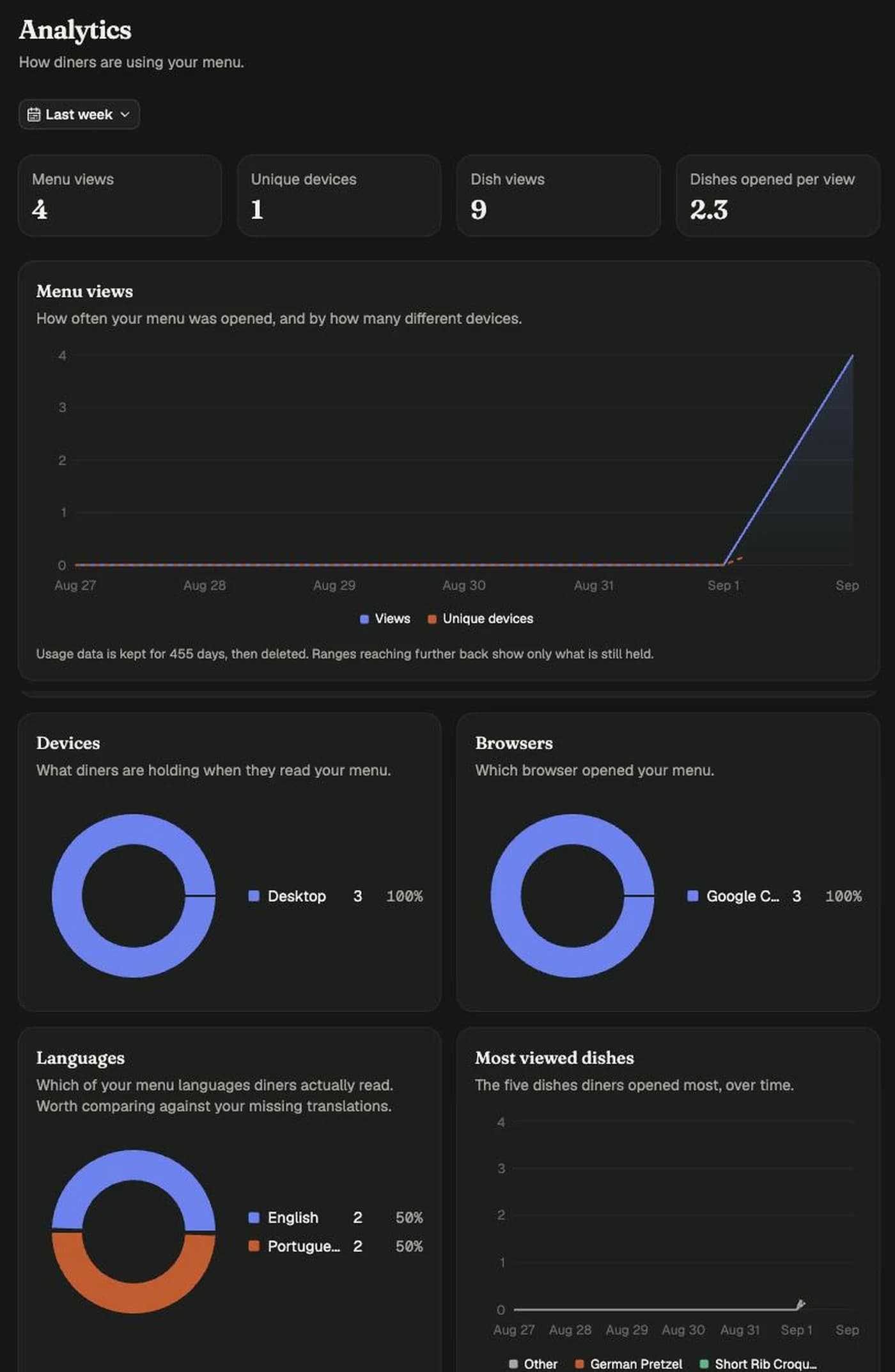
Which dishes get read, what time people browse, which languages they switch to. That last one has been the surprise in our own testing — the split between languages rarely matches what an owner expects, and it's the one thing a paper menu could never tell you.
Measured with a "no" that works
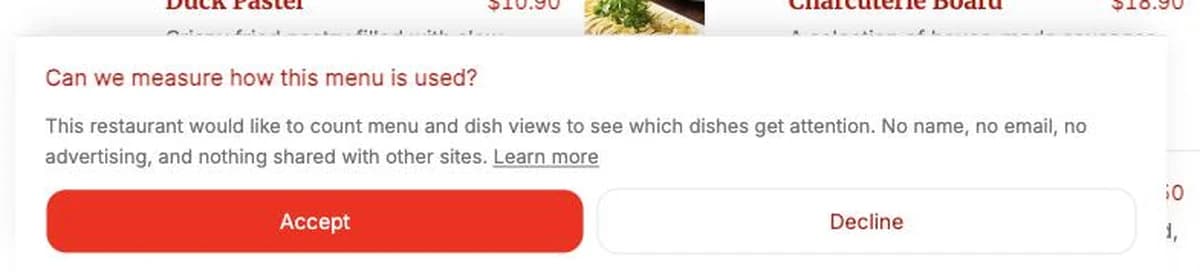
Those numbers come with a real question attached. A diner is asked before anything is counted, declining is a normal outcome rather than a maze, and there are no ad trackers or third-party cookies on the menu at all. Everything is aggregate, diner data is hosted in the EU, and none of it is sold or shared. A menu is a strange place to be tracked, and we'd rather have thinner charts than pretend otherwise.
Start free, grow when you do
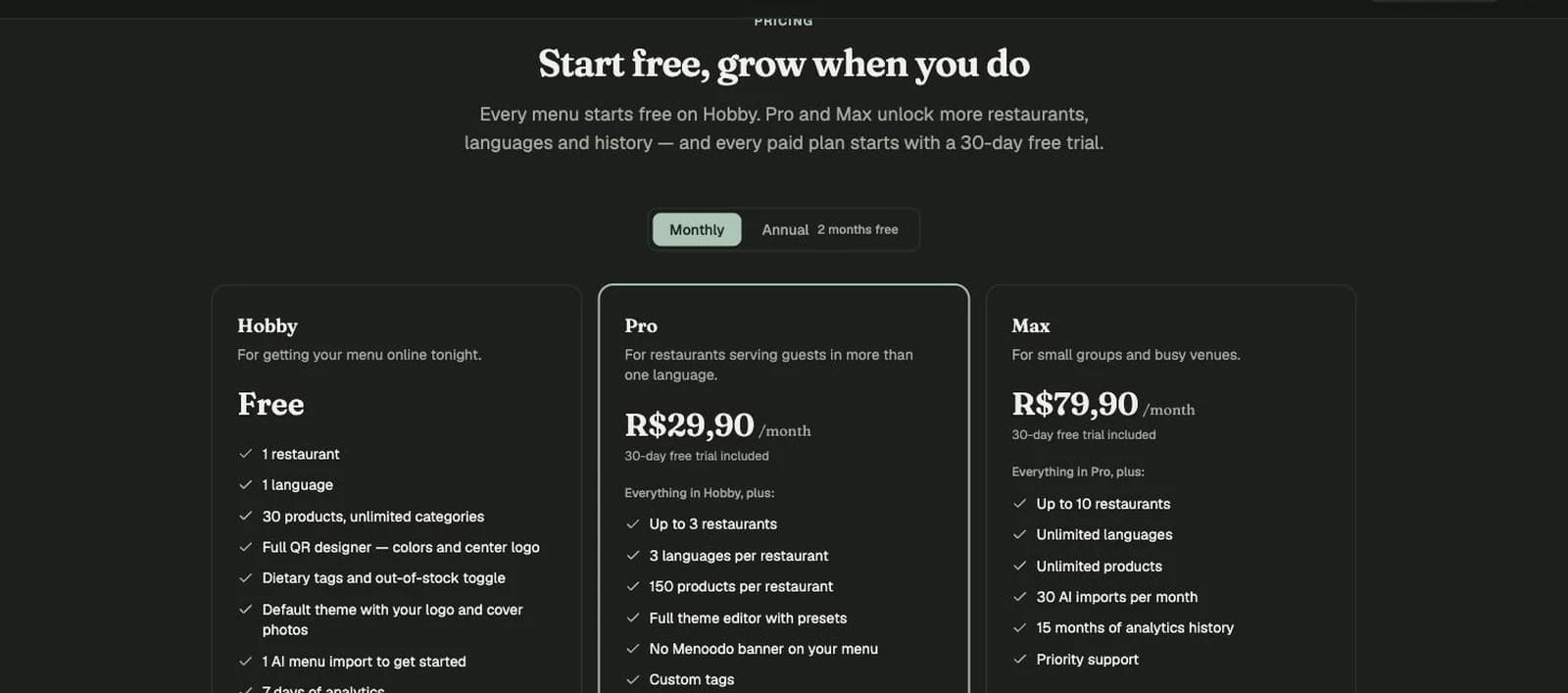
Every menu starts on Hobby, which is free and stays free: one restaurant, one language, the full QR designer. Pro and Max add more restaurants, more languages, more AI imports, longer analytics history, the reviews inbox and availability windows — and every paid plan opens with a 30-day trial, with Paddle handling the billing side as merchant of record.
If you run a restaurant, or you know someone still emailing a PDF to their host, it's at menoodo.com, and there's a summary on the Menoodo page. It's day one, so if something breaks or a language reads badly, tell us — that's the fastest way for it to get fixed.